
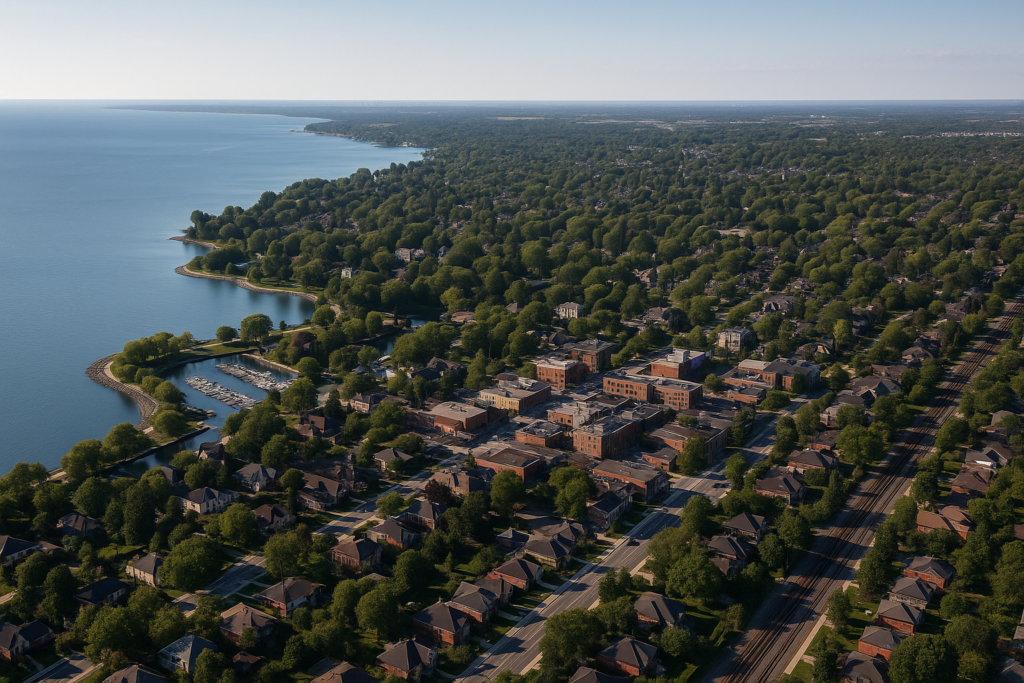
Overview of Oakville, Ontario
Why it matters
Understanding Oakville’s background and current profile helps residents and visitors navigate its unique character. This overview covers key aspects that shape life in the town. It highlights factors influencing growth, economy, and community dynamics.
History and founding of Oakville
Oakville was established in the early 19th century as a port town on Lake Ontario. Its location made it a strategic point for trade and transportation. Early settlers focused on shipbuilding and agriculture, which laid the foundation for future development.
A common challenge in Oakville’s early growth was balancing industrial expansion with maintaining its natural shoreline. This tension influenced urban planning decisions that still affect the town’s layout today.
Demographics and population trends
Oakville has experienced steady population growth driven by both local births and migration. The town’s demographic profile includes a mix of young families, professionals, and retirees. Population density varies, with higher concentrations near the town center.
One tradeoff in managing growth is maintaining community character while accommodating new housing demands. Rapid expansion can strain infrastructure if not carefully planned.
Geographical features and climate
Situated along the north shore of Lake Ontario, Oakville benefits from waterfront access and green spaces. The town’s geography includes rolling hills and river valleys, which influence drainage and development patterns.
Oakville’s climate features cold winters and warm summers, with lake effects moderating temperature extremes. Seasonal weather impacts construction schedules and outdoor activities, requiring adaptable planning.
Economic profile and major industries
Oakville’s economy is diverse, with strong sectors in manufacturing, technology, and professional services. The town hosts several corporate headquarters and industrial parks. Retail and hospitality also contribute significantly to local employment.
Economic planners must balance industrial growth with residential quality of life. Noise, traffic, and environmental impacts are common concerns when expanding commercial zones.
The presence of advanced manufacturing and tech companies supports a skilled workforce, which attracts further investment and talent.
Cultural diversity and community events
Oakville is home to a culturally diverse population, reflected in its festivals, cuisine, and arts scene. Community events range from seasonal markets to multicultural celebrations, fostering social cohesion.
Organizers face the challenge of representing diverse interests while ensuring broad community participation. Events often serve as platforms for cultural exchange and local business promotion.
Local government structure and services
Oakville’s municipal government operates under a mayor-council system. It provides services including public safety, infrastructure maintenance, and recreational programs. The town also manages zoning and development approvals.
Effective governance requires balancing budget constraints with service demands. Public input is integral in shaping policies that affect growth and quality of life.